

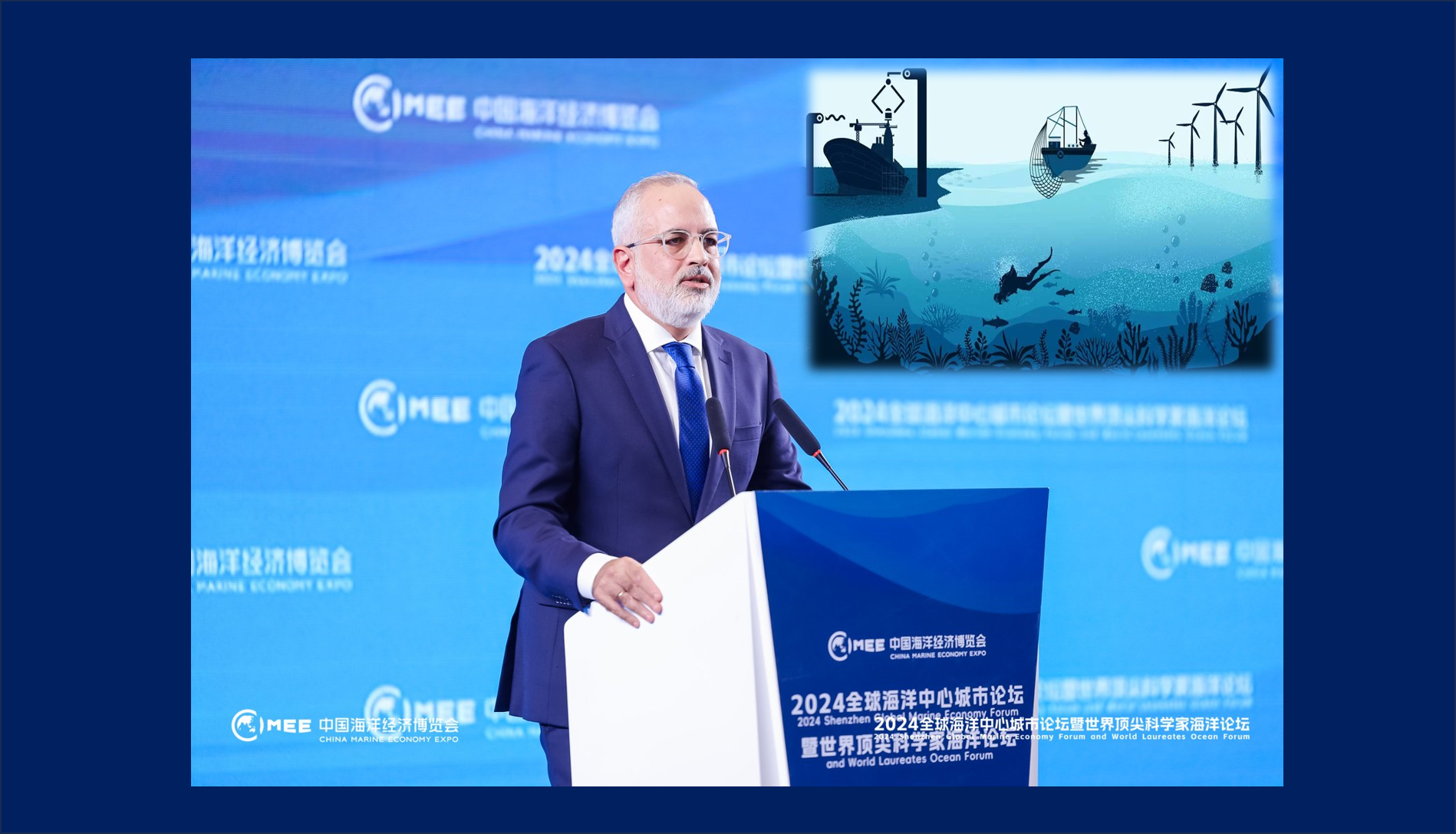
Blue Economy is the sum of the economic activities of sea and ocean-based industries, together with the assets, goods and services provided by marine ecosystems. When it comes to sustainable Blue Economy the efforts are concentrated in maximizing the growth potential of our seas and oceans in a sustainable way.
Blue Economy is gradually gaining the focus it deserves. Policy makers, potential investors and the civil society could place more emphasis on blue sectors once they have a closer look to the figures below.
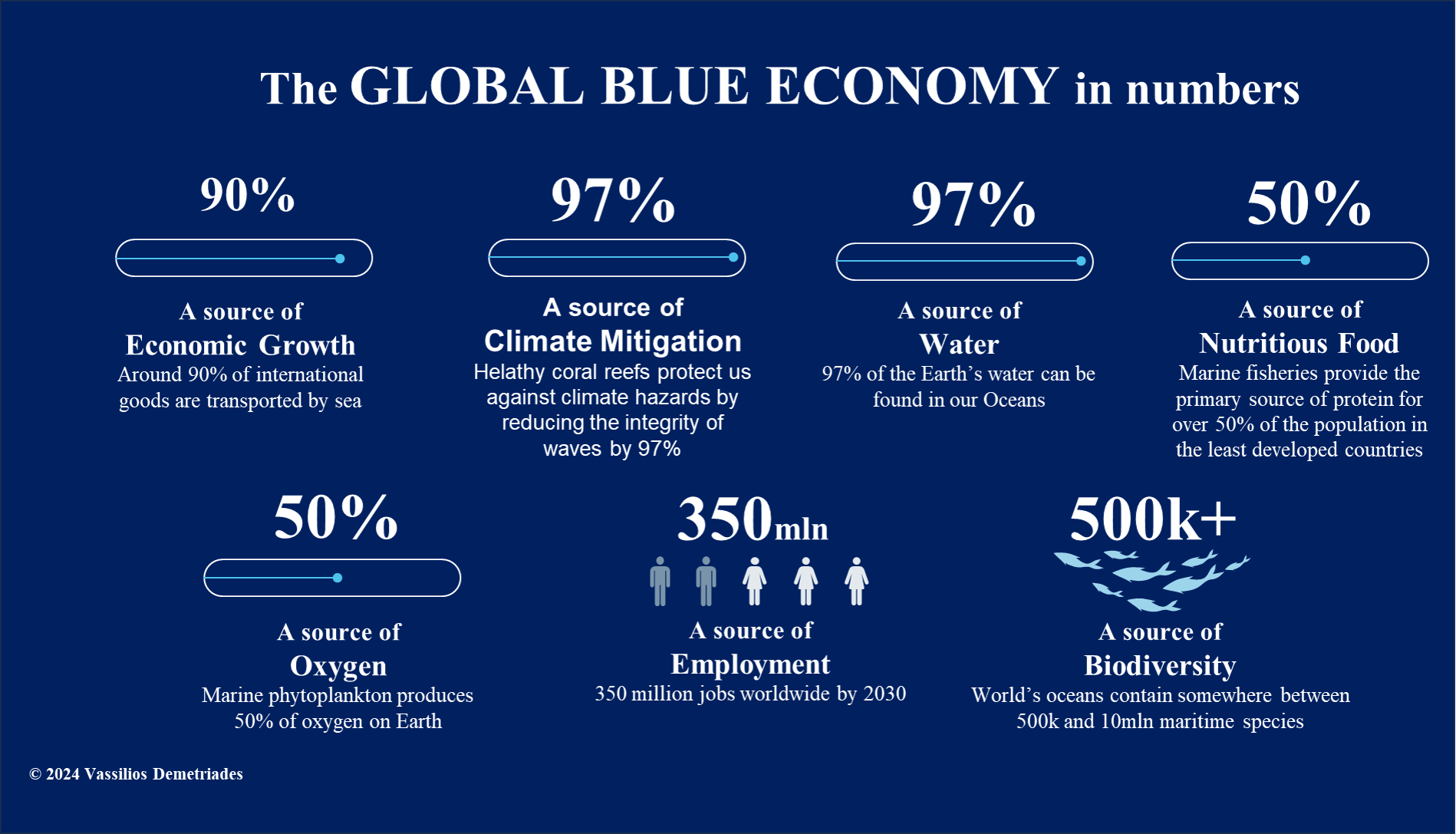 The annual gross value added of the Blue Economy to the global economy today is estimated at around €1.27 trillion and is expected at least to double by 2030. In addition to the above numbers which highlight the importance of our oceans, there are many other reasons that could justify our strong focus to the Blue Economy such as:
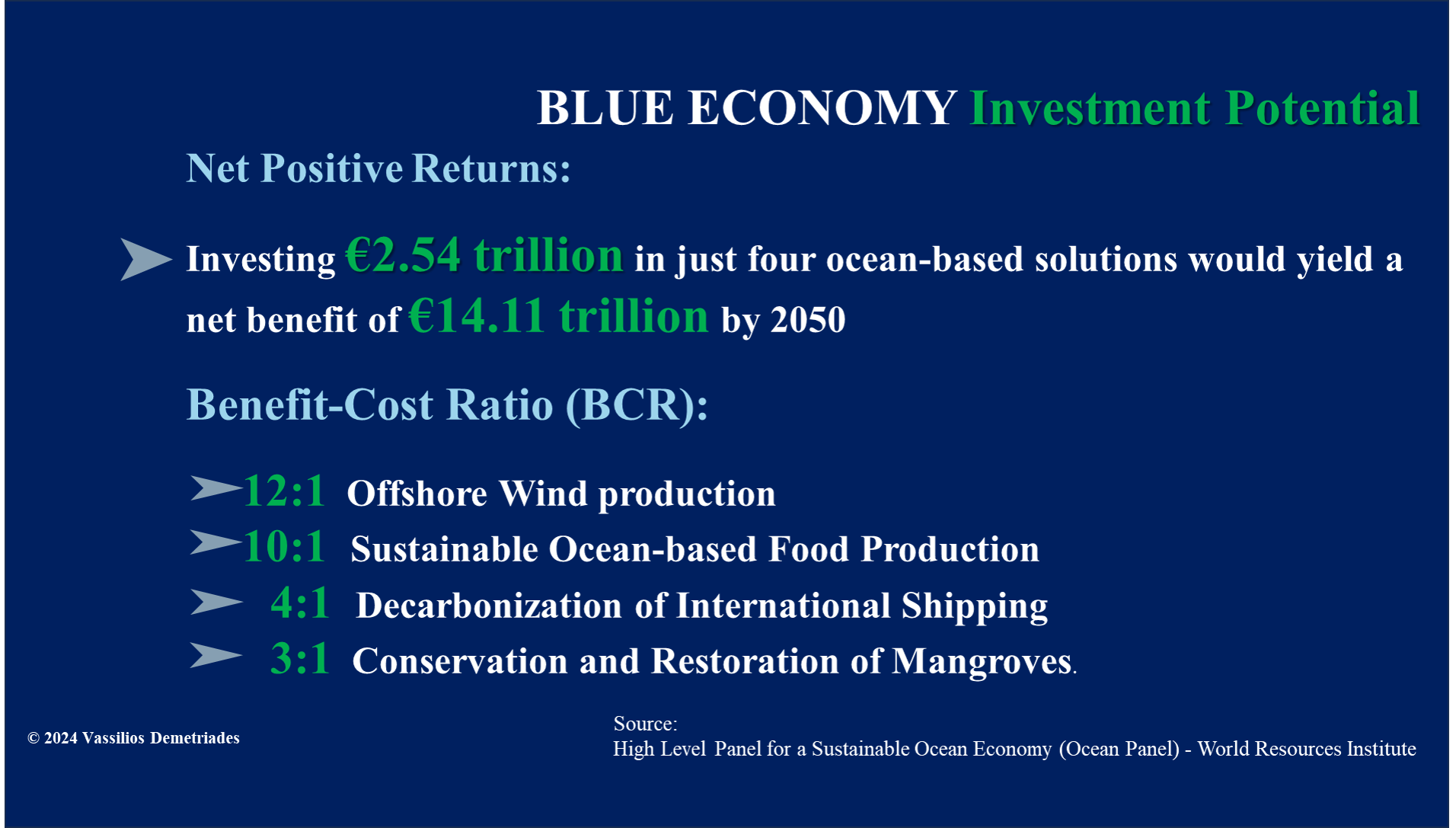 The green transition will have considerable impact on the Capital Expenditure of ocean industries. Offshore wind will grow from today’s small base to 50% of ocean-capex in 2050. Over the same timeframe, the oil and gas industry will shrink from 80% of total ocean-capex to just 25%.
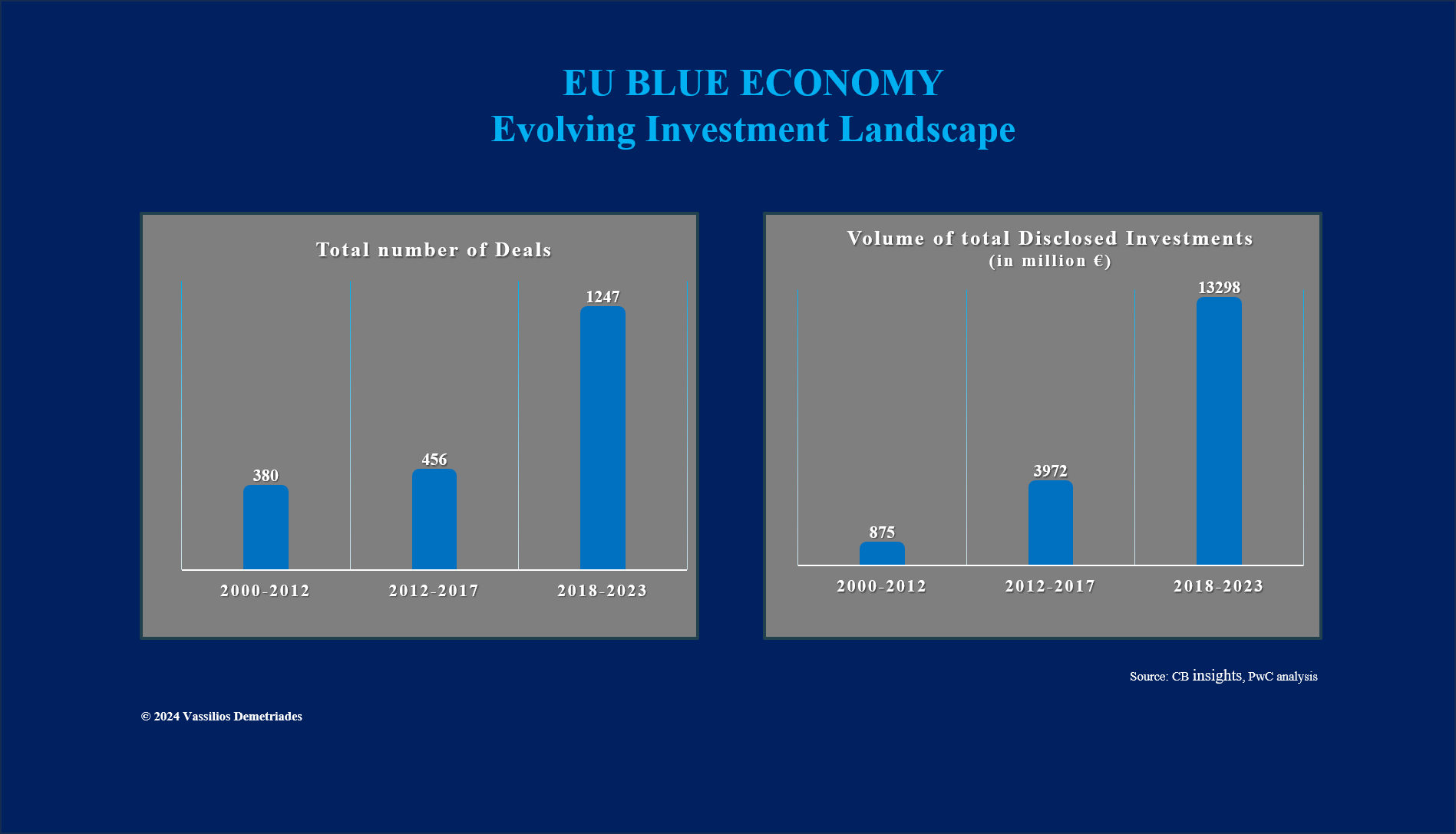
 Blue Finance is dedicated specifically to ocean-friendly projects and water supply resources. Blue finance can include blue funds, blue bonds, blue loans, and other water-focused investments. The last couple of years there are a number of initiatives in the form of guidelines and principles aiming to incentivize, support and provide clarity on blue investments, notably
 Directive 2014/89/EU sets out the legal framework for the establishment of the Maritime Spatial Planning aiming to promote the sustainable growth of maritime economies, the sustainable development of EU marine areas and the sustainable use of marine resources. Currently, 20 out of the 22 coastal EU member states adopted maritime spatial plans.
Cyprus Maritime Spatial Plan
The Maritime Spatial Plan (MSP) of Cyprus covers the whole of the marine waters - territorial sea and Exclusive Economic Zone (EEZ) - of the Republic of Cyprus. Cyprus’ EEZ and continental shelf covers 98.240 km².
Directive 2014/89/EU sets out the legal framework for the establishment of the Maritime Spatial Planning aiming to promote the sustainable growth of maritime economies, the sustainable development of EU marine areas and the sustainable use of marine resources. Currently, 20 out of the 22 coastal EU member states adopted maritime spatial plans.
Cyprus Maritime Spatial Plan
The Maritime Spatial Plan (MSP) of Cyprus covers the whole of the marine waters - territorial sea and Exclusive Economic Zone (EEZ) - of the Republic of Cyprus. Cyprus’ EEZ and continental shelf covers 98.240 km².
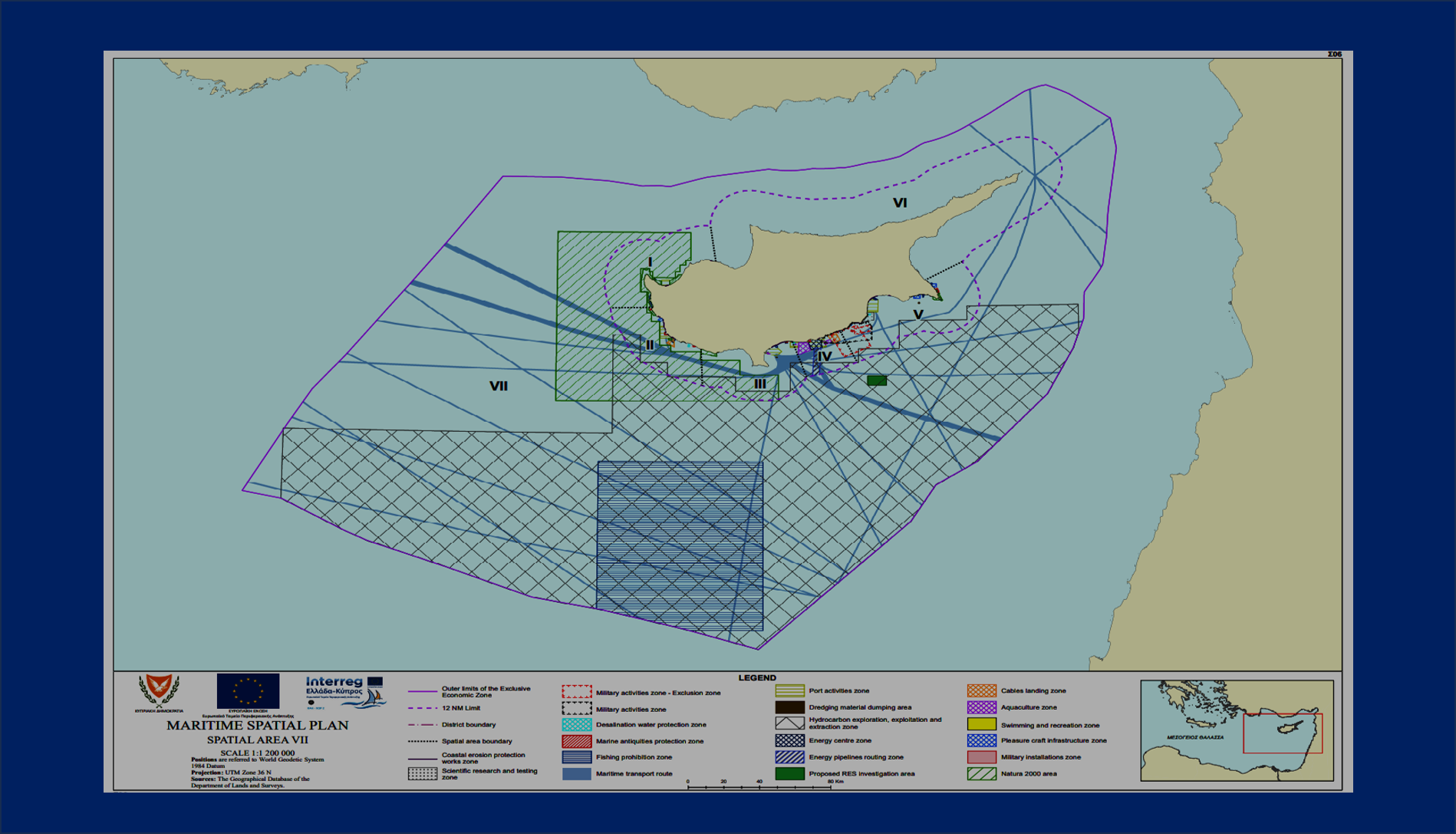 The MSP legal framework encourages investments in the marine waters of Cyprus by creating predictability, transparency and clearer licensing rules. The maritime spatial plan will facilitate the further development of the following sectors: Deep-sea Shipping; Coastal and Cruise tourism; Offshore Renewable Energy; Desalination; Marine Environment Protection; Marine Aquaculture.
The legal framework foresees fast and flexible licensing procedures. An operation license is granted within a reasonable period of time not exceeding six (6) months from the date when the application was deemed complete. The investor is granted with a Certificate of Compliance if the activity is already regulated under the existing legal framework or with a Certificate of Compatibility if the exercise or a certain action or activity is not regulated by the existing legal framework.
In conclusion, it is evident that the future of the Blue Economy will be marked by growth, thanks to contextual factors that act as driving forces, expected positive returns and key innovations. There is an ocean of investment opportunities from this fascinating sector which should be also approached as a tool for global cooperation and prosperity.
We are all connected to the Ocean! Without healthy oceans, no life, not even on land, can exist!
Words of wisdom by Jean-Michel Cousteau!
Oceans deserve our respect and care with concrete actions, but before delivering on them we must first learn and acknowledge the importance and great value of our blue planet!
The MSP legal framework encourages investments in the marine waters of Cyprus by creating predictability, transparency and clearer licensing rules. The maritime spatial plan will facilitate the further development of the following sectors: Deep-sea Shipping; Coastal and Cruise tourism; Offshore Renewable Energy; Desalination; Marine Environment Protection; Marine Aquaculture.
The legal framework foresees fast and flexible licensing procedures. An operation license is granted within a reasonable period of time not exceeding six (6) months from the date when the application was deemed complete. The investor is granted with a Certificate of Compliance if the activity is already regulated under the existing legal framework or with a Certificate of Compatibility if the exercise or a certain action or activity is not regulated by the existing legal framework.
In conclusion, it is evident that the future of the Blue Economy will be marked by growth, thanks to contextual factors that act as driving forces, expected positive returns and key innovations. There is an ocean of investment opportunities from this fascinating sector which should be also approached as a tool for global cooperation and prosperity.
We are all connected to the Ocean! Without healthy oceans, no life, not even on land, can exist!
Words of wisdom by Jean-Michel Cousteau!
Oceans deserve our respect and care with concrete actions, but before delivering on them we must first learn and acknowledge the importance and great value of our blue planet!
The annual gross value added of the Blue Economy to the global economy today is estimated at around €1.27 trillion and is expected at least to double by 2030. In addition to the above numbers which highlight the importance of our oceans, there are many other reasons that could justify our strong focus to the Blue Economy such as:
- If oceans were a separate economy, they would stand as the world’s seventh largest.
- Blue Economy is critical to the world’s transition to a sustainable future, and governments, businesses, and individuals must prioritize and invest in it.
- The oceans play an essential role in climate change, biodiversity, livelihoods, transport, and energy security, and protecting them is essential for a healthy future for people and the planet.
- Blue Economy has enormous potential for resource wealth, economic growth, employment and innovation, ocean is rightly considered to be the “next great economic frontier”.
- Strengthening the Regulatory Framework
- Strengthening International Cooperation
- Fostering public and private investments
- Building a Blue Economy mindset culture
The green transition will have considerable impact on the Capital Expenditure of ocean industries. Offshore wind will grow from today’s small base to 50% of ocean-capex in 2050. Over the same timeframe, the oil and gas industry will shrink from 80% of total ocean-capex to just 25%.
Blue Finance is dedicated specifically to ocean-friendly projects and water supply resources. Blue finance can include blue funds, blue bonds, blue loans, and other water-focused investments. The last couple of years there are a number of initiatives in the form of guidelines and principles aiming to incentivize, support and provide clarity on blue investments, notably
- the Sustainability Blue Economy Finance Principles (the UN Principles) developed in March 2018 in collaboration with the European Commission, the World Wildlife Fund, the World Resources Institute and the European Investment Bank.
- the Blue Finance Guidelines issued by the International Finance Corporation (IFC) in January 2022
- the Voluntary Blue Bond Guidance issued in September 2023 by the International Capital Markets Association (ICMA)
- the High-level Green and Blue Bond Framework and the Ocean Finance Framework published by the Asian Development Bank (ADB) in September 2021 and 2022.
Directive 2014/89/EU sets out the legal framework for the establishment of the Maritime Spatial Planning aiming to promote the sustainable growth of maritime economies, the sustainable development of EU marine areas and the sustainable use of marine resources. Currently, 20 out of the 22 coastal EU member states adopted maritime spatial plans.
Cyprus Maritime Spatial Plan
The Maritime Spatial Plan (MSP) of Cyprus covers the whole of the marine waters - territorial sea and Exclusive Economic Zone (EEZ) - of the Republic of Cyprus. Cyprus’ EEZ and continental shelf covers 98.240 km².
The MSP legal framework encourages investments in the marine waters of Cyprus by creating predictability, transparency and clearer licensing rules. The maritime spatial plan will facilitate the further development of the following sectors: Deep-sea Shipping; Coastal and Cruise tourism; Offshore Renewable Energy; Desalination; Marine Environment Protection; Marine Aquaculture.
The legal framework foresees fast and flexible licensing procedures. An operation license is granted within a reasonable period of time not exceeding six (6) months from the date when the application was deemed complete. The investor is granted with a Certificate of Compliance if the activity is already regulated under the existing legal framework or with a Certificate of Compatibility if the exercise or a certain action or activity is not regulated by the existing legal framework.
In conclusion, it is evident that the future of the Blue Economy will be marked by growth, thanks to contextual factors that act as driving forces, expected positive returns and key innovations. There is an ocean of investment opportunities from this fascinating sector which should be also approached as a tool for global cooperation and prosperity.
We are all connected to the Ocean! Without healthy oceans, no life, not even on land, can exist!
Words of wisdom by Jean-Michel Cousteau!
Oceans deserve our respect and care with concrete actions, but before delivering on them we must first learn and acknowledge the importance and great value of our blue planet!